
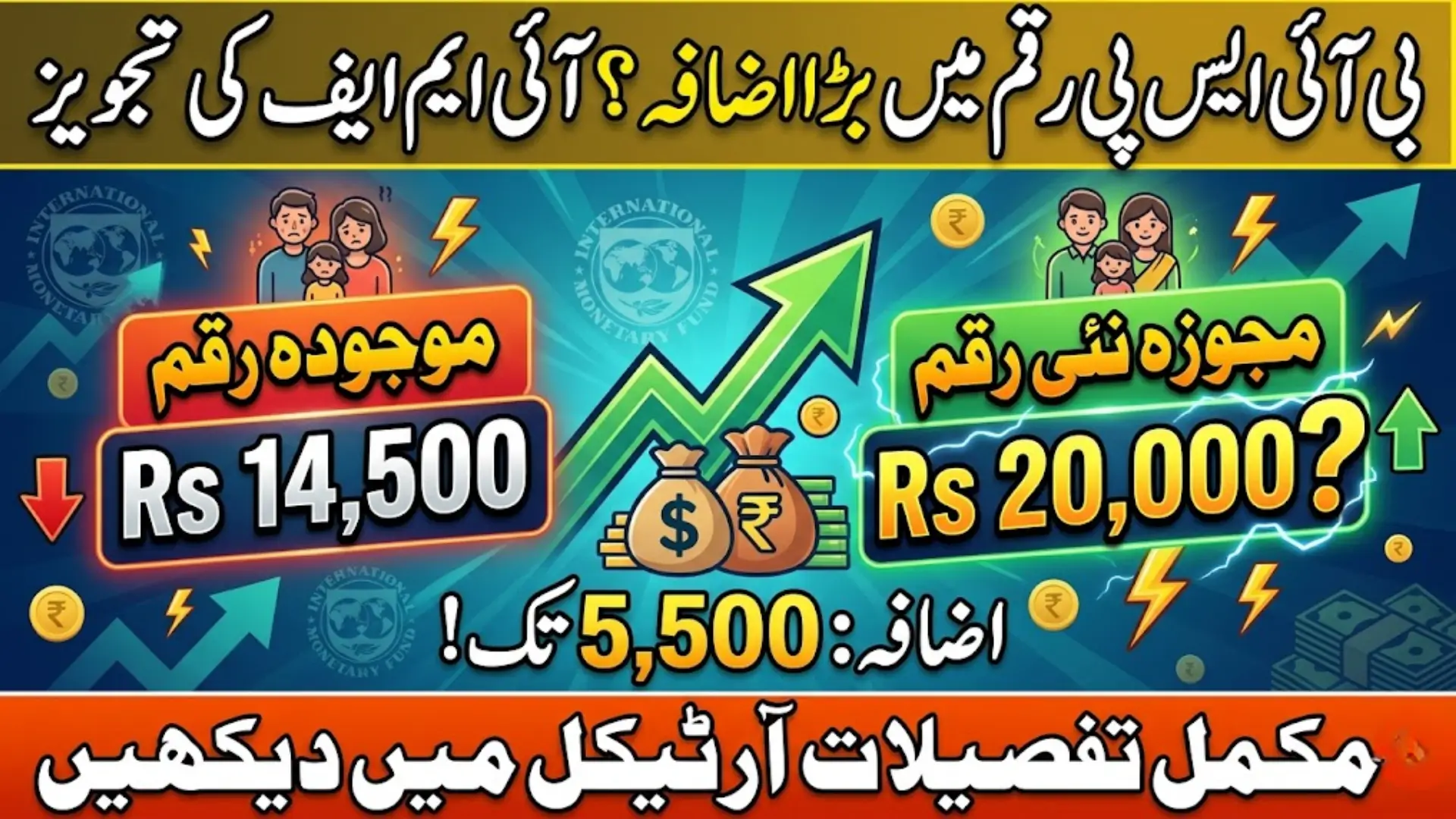
IMF Suggests Increase in BISP Payment in Pakistan
The International Monetary Fund (IMF) has suggested an increase in the financial support provided under Pakistan’s Benazir Income Support Program (BISP). The proposal recommends raising the quarterly Kafalat payment to help low-income families deal with rising inflation and increasing living costs. This step is part of ongoing discussions between the IMF and Pakistani authorities.
The proposal is still under review and has not been finalized. Government officials are currently negotiating with IMF representatives along with other departments to assess the impact of the suggested increase. The final decision will depend on broader fiscal conditions and program requirements.
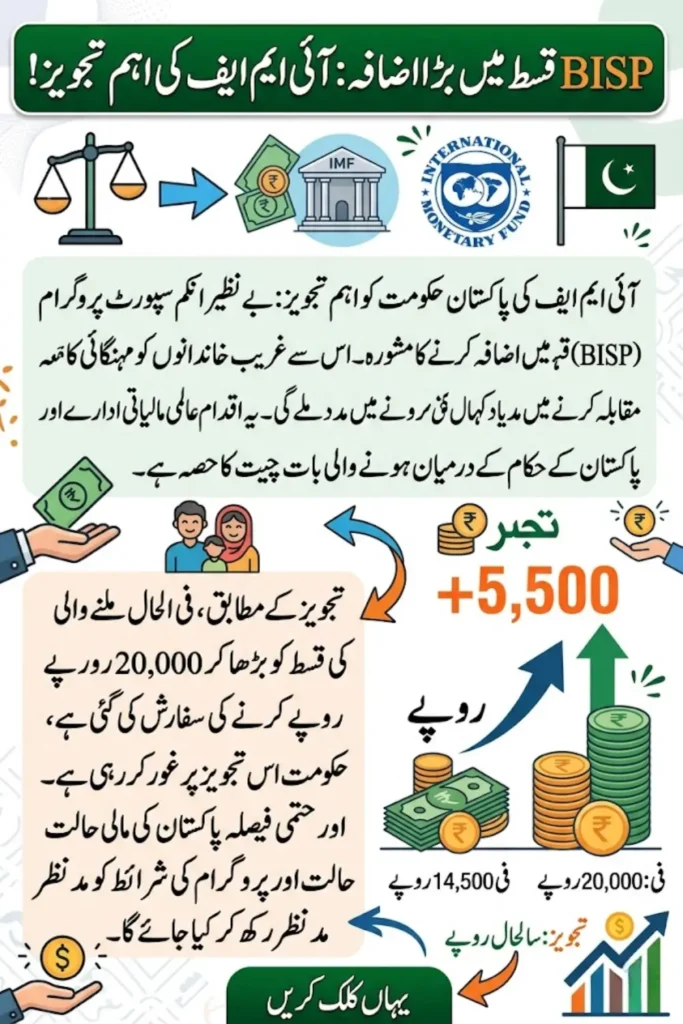
Current Situation of BISP Payment in Pakistan
At present, the BISP Kafalat program provides a quarterly payment of Rs. 14,500 to eligible families. This amount is intended to support basic household needs such as food, utilities, and essential expenses for low-income groups.
The IMF has proposed increasing this amount by Rs. 5,500, which would raise the total quarterly payment to Rs. 20,000. The main goal of this suggestion is to improve financial relief for vulnerable households facing inflation pressure.
Table 1: Current vs Proposed BISP Payment in Pakistan
| Description | Amount (Quarterly) |
|---|---|
| Current BISP Kafalat Payment | Rs. 14,500 |
| Proposed Increase | Rs. 5,500 |
| Proposed Total Payment | Rs. 20,000 |
IMF Discussion on BISP Payment Increase in Pakistan
The proposed increase is part of ongoing negotiations between the IMF and Pakistani economic authorities. Meetings are being held with the Federal Board of Revenue (FBR) and other relevant departments to review financial policies and social protection spending.
These discussions are focused on balancing economic reforms with social welfare needs. The IMF is evaluating Pakistan’s fiscal framework while ensuring that support for low-income families remains effective and sustainable.
Table 2: Key Areas of IMF and Pakistan Discussions
| Area of Discussion | Focus |
|---|---|
| Social Protection | Review of BISP stipend increase |
| Tax Policy | Adjustment of tax structure and exemptions |
| Fiscal Reforms | Overall budget stability and revenue management |
| Economic Program | IMF support framework and conditions |
Reasons Behind BISP Payment Increase Proposal
One of the main reasons for the proposed increase is the rising inflation in Pakistan. Low-income households are struggling to manage daily expenses due to higher prices of food, energy, and essential goods.
The IMF believes that increasing social assistance can help reduce financial pressure on vulnerable families. This adjustment is also part of strengthening social safety nets under Pakistan’s economic reform program.
Important Highlights of BISP Payment Increase in Pakistan
Sources also suggest that if approved, the revised Rs. 20,000 Kafalat payment could be implemented in phases to reduce pressure on the national budget.
- Proposed increase aims to support low-income families affected by inflation
- Discussions are part of broader IMF economic review process
These highlights show that the decision is not only about increasing payments but also about improving the overall structure of social welfare support. The final outcome will depend on agreement between both sides.
Possible Outcomes of the Proposed BISP Payment Increase
The proposal for increasing BISP payments may result in different outcomes depending on negotiations. The government may approve the full increase, partially adjust it, or maintain the current payment structure.
Final approval will depend on Pakistan’s fiscal capacity and IMF program requirements. The decision will aim to balance financial stability with the need to support vulnerable communities.
PM SME Loans in Pakistan Shehbaz Sharif Announces Easier Financing for Women Entrepreneurs
Conclusion
The IMF’s suggestion to increase BISP payments reflects efforts to provide relief to low-income families in Pakistan. The proposed rise from Rs. 14,500 to Rs. 20,000 is currently under discussion and not yet finalized.
The outcome of these talks will play an important role in shaping future social protection policies. It also highlights the ongoing effort to manage inflation challenges while maintaining economic stability.
FAQs
What is the proposed BISP payment increase in Pakistan?
The IMF has suggested increasing the quarterly payment from Rs. 14,500 to Rs. 20,000.
This includes an additional Rs. 5,500 for low-income families.
Is the BISP payment increase approved?
No, the proposal is still under discussion between Pakistan and the IMF.
A final decision has not yet been announced.
Why is the BISP payment increase being considered?
The increase is aimed at helping families cope with inflation and rising living costs.
It is part of broader social protection reforms.
Who is involved in the BISP payment discussions?
The IMF, Pakistani authorities, and the Federal Board of Revenue (FBR) are involved.
They are reviewing fiscal and social welfare policies.
What could happen after the discussions?
The proposal may be approved, modified, or rejected depending on negotiations.
The final decision will depend on economic conditions and IMF agreement.
MG HS PHEV Installment Plan 2026: Zero Markup, Free Insurance and Home Charger