

PM SME Loans in Pakistan
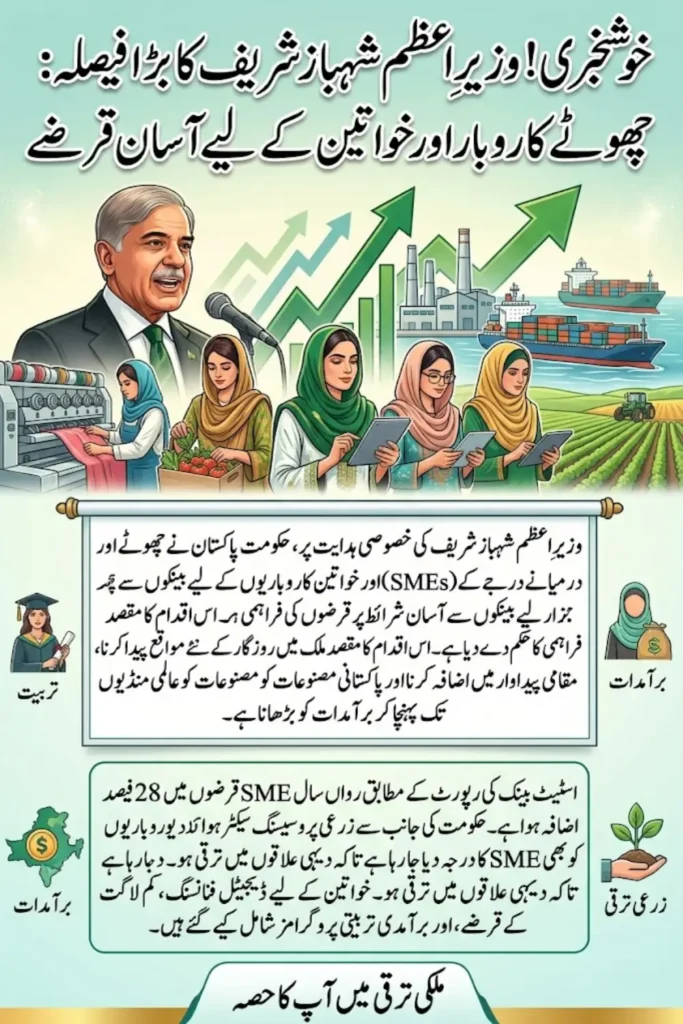
Pakistan is increasing its focus on small and medium enterprises (SMEs) to strengthen the economy and improve exports. Prime Minister Shehbaz Sharif recently directed commercial banks to provide easier loans to SMEs and women entrepreneurs.
The government believes SMEs can create jobs, increase production, and improve export performance. Officials from State Bank of Pakistan, Small and Medium Enterprises Development Authority, and the Ministry of Industries also shared updates on new financing and development plans.
Punjab Exam Attempts Increase to Six Within Four Years for Students Across All Boards
Importance of SMEs in Pakistan’s Economy
SMEs play a major role in Pakistan’s business sector. Nearly 90 percent of businesses in the country fall under the SME category. These businesses support millions of jobs and contribute to economic activity across different industries.
The government sees SMEs as a key driver of exports and industrial growth. However, many businesses still face problems such as limited financing, weak documentation, and poor access to international markets.
Key contributions of SMEs include:
- Job creation across urban and rural areas
- Support for local manufacturing
- Growth in exports and trade
- Development of women-led businesses
- Expansion of agriculture-related industries
| SME Sector Contribution | Impact on Economy |
|---|---|
| Employment generation | Creates millions of jobs |
| Industrial growth | Supports manufacturing and services |
| Export potential | Increases foreign exchange earnings |
| Innovation | Encourages small business development |
PM Shehbaz Sharif Directs Banks to Improve SME Financing
During the review meeting, the prime minister instructed commercial banks to make SME loans easier and more accessible. He stressed that small businesses need affordable financing to grow and compete in local and international markets.
The government also wants banks to support women entrepreneurs who often face difficulties in securing loans. Officials were directed to improve low-cost financing systems and reduce barriers for small businesses.
The major focus areas include:
- Easier access to bank loans
- Low-cost financing options
- Digital financing services
- Financial support for startups
- Export financing assistance
Prime Minister Shehbaz Sharif has directed banks to expand low-cost SME and women entrepreneur loans, while SME financing has recorded a 28% increase as part of Pakistan’s economic growth and export promotion strategy.
Women Entrepreneurs to Receive Greater Support
The government is placing special attention on women-led businesses. Women entrepreneurs in Pakistan often struggle with access to finance, business registration, and market opportunities.
Prime Minister Shehbaz Sharif welcomed efforts to increase women’s participation in SMEs. He said empowering women through business opportunities can help strengthen the national economy and reduce unemployment.
Challenges faced by women entrepreneurs include:
- Limited collateral for loans
- Low financial literacy
- Restricted market access
- Lack of business networks
- Documentation barriers
| Support Measures for Women Entrepreneurs | Expected Benefit |
|---|---|
| Easier business loans | Increased business growth |
| Export support programs | Better international sales |
| Training initiatives | Improved business skills |
| Digital financing access | Faster loan processing |
SBP Reports 28 Percent Increase in SME Loans
The State Bank of Pakistan informed the meeting that SME lending has increased significantly during the current fiscal year. Officials said loans to SMEs recorded a 28 percent increase compared to previous periods.
Private sector lending reached Rs1.1 trillion in the last fiscal year. During the first three quarters of the current year, lending already crossed the target of Rs904 billion.
Important figures shared during the meeting:
- Rs1.1 trillion private sector lending last fiscal year
- Lending target exceeded in current fiscal year
- 28 percent rise in SME loans
- New financing goals set for 2028
The increase shows growing interest in supporting small businesses. However, experts believe more reforms are still needed to improve access to credit nationwide.
Government Plans for SME Export Growth
The government also discussed ways to help SMEs enter international markets. Officials highlighted roadshows, exhibitions, and export financing schemes designed to improve market access.
A separate export financing window has reportedly been established for SMEs. This step aims to help smaller businesses compete globally and increase Pakistan’s export earnings.
Planned export support measures include:
- International trade exhibitions
- Vendor profiling and value chain support
- Export financing facilities
- Business networking opportunities
- Market access programs
These efforts are expected to improve the visibility of Pakistani products in foreign markets.
CM Punjab Sailab Bahali Program 2026: Full Details of Compensation and Registration Process
48 SME Development Initiatives Underway
Officials informed the meeting that 48 initiatives are currently being implemented in eight strategic sectors. These programs are designed to improve SME growth over the next two and four years.
The development roadmap was prepared by SMEDA and the Ministry of Industries and Production. The prime minister asked officials to submit an implementation plan with measurable targets and timelines.
The initiatives focus on:
- Industrial modernization
- Digital financing systems
- Business formalization
- SME database creation
- Export competitiveness
The phased plan is intended to create long-term support for small businesses across Pakistan.
Agriculture Processing Sector to Get SME Status
The prime minister also directed authorities to grant SME status to processing sectors within agriculture. This move could improve financial access for agriculture-based businesses involved in value-added production.
Agriculture remains one of Pakistan’s largest economic sectors. By including processing industries under SME policies, the government hopes to boost rural industries and export potential.
Possible benefits of SME status for agriculture processing include:
- Easier financing access
- Tax and policy support
- Better export opportunities
- Improved industrial growth
- Increased value-added production
This step may also encourage investment in food processing and agri-based manufacturing.
Digital Financing and SME Database Reforms
Digital financing is becoming an important part of Pakistan’s SME strategy. Officials discussed measures to improve digital loan systems and simplify financing procedures.
The government is also working on creating a national SME database. Better documentation can help businesses become part of the formal economy and improve access to financial services.
Planned reforms include:
- Digital loan application systems
- Faster approval processes
- National SME data collection
- Formal business registration support
- Improved banking transparency
Experts believe these reforms can improve trust between banks and small businesses.
Challenges Still Facing Pakistan’s SMEs
Despite recent improvements, SMEs in Pakistan continue to face major challenges. Many small businesses still struggle to obtain financing due to strict banking requirements and lack of collateral.
Export-related barriers, weak supply chain integration, and poor documentation also affect business growth. Rural businesses and women entrepreneurs often face even greater difficulties.
Major SME challenges include:
- Limited access to affordable loans
- Weak business documentation
- High financing costs
- Limited export knowledge
- Informal business operations
Addressing these problems will be important for achieving long-term economic growth.
Future Outlook for Pakistan’s SME Sector
The government’s latest measures show stronger policy attention toward SMEs. Increased financing targets and export support programs may help improve business activity in the coming years.
If implemented effectively, these initiatives can create jobs, increase exports, and strengthen Pakistan’s industrial base. Continued cooperation between banks, regulators, and businesses will remain important for success.
The SME sector has significant growth potential. Better financing access and policy reforms could help small businesses become a stronger part of Pakistan’s economy.
FAQs
What did PM Shehbaz Sharif announce for SMEs?
He directed banks to provide easier loans to SMEs and women entrepreneurs. He also emphasized export support for small businesses.
How much did SME loans increase in Pakistan?
According to the State Bank of Pakistan, SME loans increased by 28 percent during the current fiscal year.
Why are SMEs important for Pakistan’s economy?
SMEs create jobs, support industrial growth, and contribute to exports. They represent nearly 90 percent of businesses in Pakistan.
What support will women entrepreneurs receive?
The government plans to improve loan access, export opportunities, and financial inclusion for women-led businesses.
What is the purpose of the SME database?
The database will improve documentation and help businesses join the formal economy for better financing access.
How will agriculture businesses benefit from SME status?
Agriculture processing businesses may receive easier financing, policy support, and better export opportunities under SME programs.
BISP Error Code 938 Issue Solve In 2026 Latest Update Fingerprint Not Match Problem