
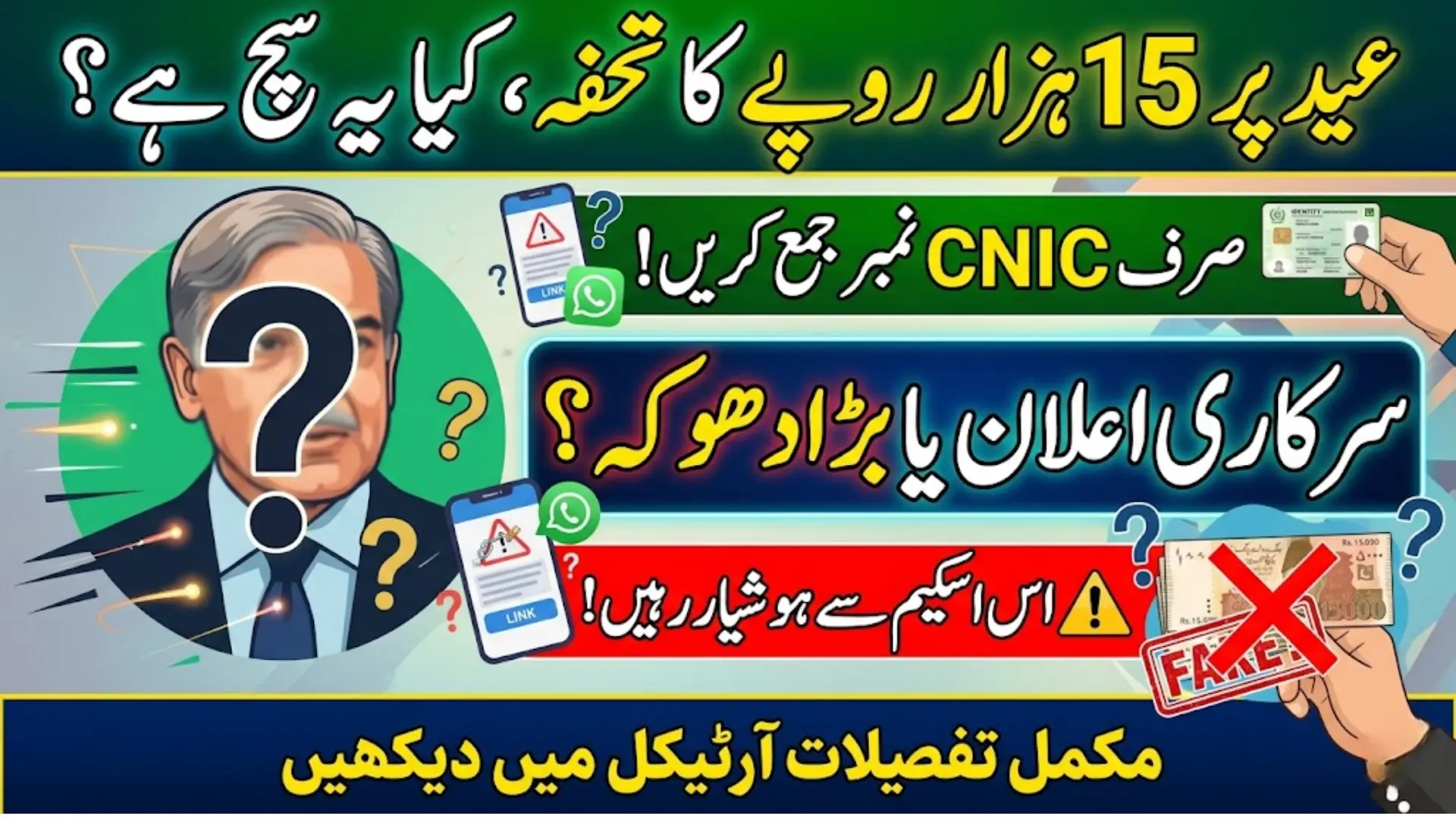
PM Shahbaz Sharif Eid Offer
In recent days, social media platforms such as WhatsApp, Facebook, TikTok, and various websites have been flooded with viral posts claiming that Prime Minister Shehbaz Sharif is offering Rs. 15,000 to every family as an Eid gift. These posts usually encourage people to click on unknown links, submit their CNIC numbers, and complete online registration forms to receive financial assistance. Due to the rapid spread of these messages, many people across Pakistan are confused about whether the scheme is genuine or a scam.
After reviewing available information, there is currently no official announcement from the Government of Pakistan regarding any scheme called “PM Shahbaz Sharif Eid Offer 15000.” Most of the circulating posts appear to be misleading or fake. Cybersecurity experts also warn that such campaigns are often designed to steal personal information from users. This is why it is important for the public to verify every online claim before sharing personal details online.
BISP Stipend Increase Announced for Kafalat, Education and Nashonuma Programs
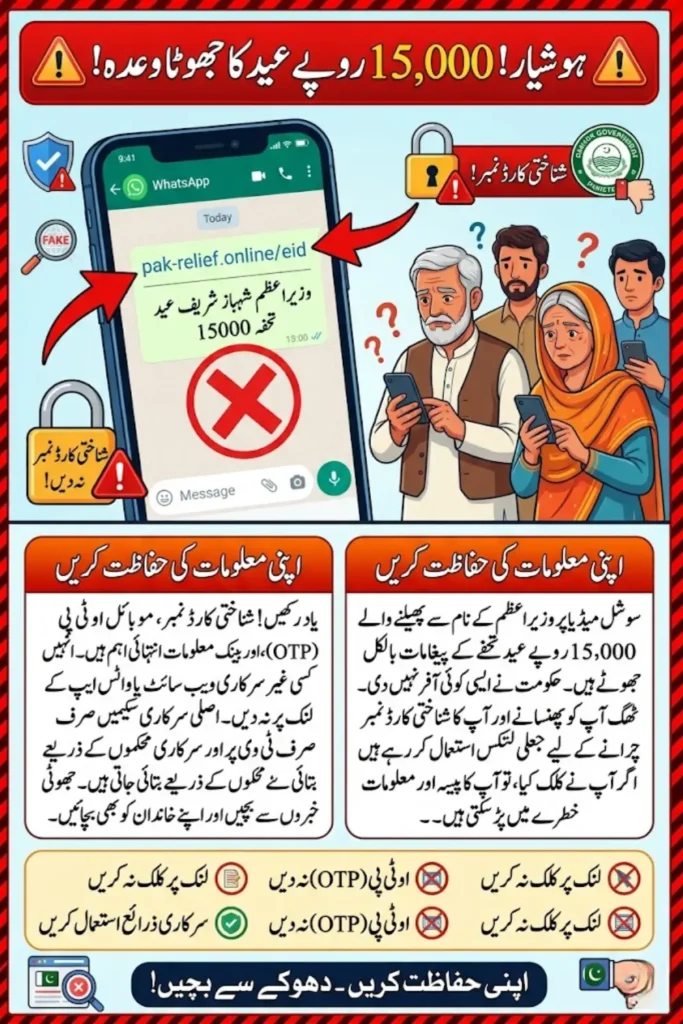
PM Shahbaz Sharif Eid Offer 15000 Viral Message Explained
The viral messages usually claim that the federal government is distributing Rs. 15,000 to poor or deserving families before Eid. These posts often use emotional language and urgent instructions to attract attention quickly. Many messages ask users to register immediately and share the offer with others to increase its spread on social media.
Most of these posts contain suspicious links that redirect users to unofficial websites. In many cases, these websites are poorly designed and contain grammar mistakes or fake registration forms. Such signs are common in online scams where fraudsters attempt to gain users’ trust and collect sensitive information like CNIC numbers and mobile details.
Is PM Shahbaz Sharif Eid Offer 15000 Real or Fake?
At present, no verified government source has confirmed the existence of this Eid offer scheme. Official welfare programmes in Pakistan are usually announced through press conferences, government departments, national television channels, or verified online platforms. No such official notification exists for this viral Eid offer.
Experts believe these messages are part of phishing or scam campaigns designed to exploit public trust. Fake schemes often become more active during festivals because people are emotionally motivated and more likely to believe financial assistance offers. This makes it easier for scammers to collect personal data from unaware users.
| Viral Claim | Reality Check |
|---|---|
| Government giving Rs. 15,000 to every family | No official confirmation |
| Online registration through random links | Unsafe and suspicious |
| CNIC submission required | Risk of data misuse |
| Limited-time Eid offer | Common scam tactic |
| Viral social media promotion | Not proof of authenticity |
How Fake Eid Schemes Target Social Media Users
Cybercriminals often use fake government offers to create panic, excitement, or urgency among users. The goal is usually to collect private information or redirect users to dangerous websites. Some scam websites even ask people to provide OTP codes, mobile banking details, or account passwords.
Once scammers gain access to personal information, they may misuse it for identity theft, financial fraud, or unauthorized account access. Many people underestimate the importance of protecting their CNIC numbers and phone details, but leaked information can create serious security risks later.
Common Signs of Fake Online Government Schemes
Cybersecurity experts have also warned users not to share CNIC numbers, OTP codes, or banking details on unverified websites, as such scams may lead to identity theft and financial fraud.
- Unknown website links instead of official government portals
- Poor grammar and spelling mistakes in messages
- Requests to share posts with multiple people
- Urgent language forcing immediate action
- Demands for OTP codes or banking details
These warning signs are commonly seen in online scams targeting social media users in Pakistan. Real government schemes follow proper procedures and do not depend on random WhatsApp forwards or suspicious links for registration.
People should also remember that official relief programmes always include transparent eligibility criteria, proper registration systems, and verified support channels. If any scheme lacks these details, it should be treated carefully until verified through trusted sources.
Risks of Sharing CNIC and Personal Information Online
Many users unknowingly share sensitive information online without understanding the possible consequences. Your CNIC number, mobile number, and OTP codes are private details that should never be submitted on unknown websites or shared through unverified forms.
Scammers can use stolen information to access mobile wallets, create fake accounts, conduct financial fraud, or misuse identities for illegal activities. Recovering from identity theft or financial scams can become difficult and time-consuming. This is why cybersecurity experts strongly advise users to avoid entering personal details on suspicious websites.
| Sensitive Information | Possible Risk |
|---|---|
| CNIC Number | Identity theft |
| OTP Code | Unauthorized account access |
| Mobile Number | Scam targeting and fraud |
| Banking Information | Financial theft |
| Personal Documents | Illegal misuse of identity |
Official Sources People Should Trust
The safest way to verify any government announcement is by checking official and trusted sources. Government relief schemes are normally announced through recognized institutions and widely covered by national media. Random social media posts should never be considered authentic proof.
People should rely on official government websites, verified social media accounts, NADRA updates, BISP announcements, and trusted TV news channels for accurate information. Verification is important because fake news spreads quickly online, especially during special occasions like Eid and Ramadan.
Important Safety Tips to Avoid Online Eid Scams
- Never click on unknown or suspicious links
- Do not share CNIC numbers on unofficial websites
- Avoid giving OTP codes to anyone online
- Verify every scheme through trusted government sources
- Report fake pages and suspicious websites immediately
Awareness is one of the strongest protections against online fraud. People should also educate family members, especially elderly users and young social media users, about the dangers of fake online schemes and phishing attacks.
Responsible social media behavior is equally important. Even forwarding unverified posts can help scammers spread false information more quickly across different platforms.
Pakistan Navy Short Service Commission Course 2026-B Registration Guide
Difference Between Real and Fake Government Schemes
Real government welfare programmes follow proper legal and administrative procedures before public launch. They are officially announced through government departments, supported by transparent documentation, and covered by reliable news organizations. Registration systems are usually secure and publicly verified.
Fake schemes, on the other hand, depend mostly on emotional marketing and social media virality. Their main goal is to create urgency and collect user data before people realize the information is false. Understanding these differences can help people avoid online scams more effectively.
| Real Government Scheme | Fake Viral Scheme |
|---|---|
| Officially announced | Shared mostly through social media |
| Covered by trusted media | No reliable news coverage |
| Uses official portals | Uses suspicious links |
| Clear eligibility rules | Unrealistic promises |
| Verified helpline support | No authentic contact details |
Why Fake News Spreads Quickly on Social Media
Social media platforms allow information to spread within seconds, which is why fake news often becomes viral very quickly. Emotional headlines, financial promises, and fear-based content attract attention and encourage users to forward posts without verification.
Another major reason behind the spread of misinformation is low digital awareness. Many users trust forwarded messages without checking official sources first. This highlights the growing importance of media literacy and online safety education in Pakistan’s digital environment.
Conclusion
The viral PM Shahbaz Sharif Eid Offer 15000 messages currently circulating on social media appear to be fake and unverified. No official government announcement has confirmed any such financial assistance programme. People should remain cautious and avoid sharing personal information through unknown links or suspicious websites.
Protecting personal data has become extremely important in today’s digital world. Always verify news through official government channels before trusting or forwarding any online offer. Awareness, caution, and responsible social media use can help prevent scams and protect families from online fraud.
FAQs
Is PM Shahbaz Sharif Eid Offer 15000 officially announced?
No, there is currently no official confirmation from the Government of Pakistan regarding this scheme.
Why are these Eid offer messages considered suspicious?
Most messages use unknown links, request personal data, and lack official verification from trusted government sources.
Can sharing CNIC information online be dangerous?
Yes, scammers can misuse CNIC details for identity theft, fraud, and unauthorized account activities.
How can I verify real government schemes in Pakistan?
You should check official government websites, verified social media accounts, NADRA updates, and trusted news channels.
What should I do if I receive a fake Eid offer message?
Avoid clicking on links, do not share personal information, and report suspicious websites or social media pages.
NAVTTC Blended International IT Training Program 2026 Online Application Guide