
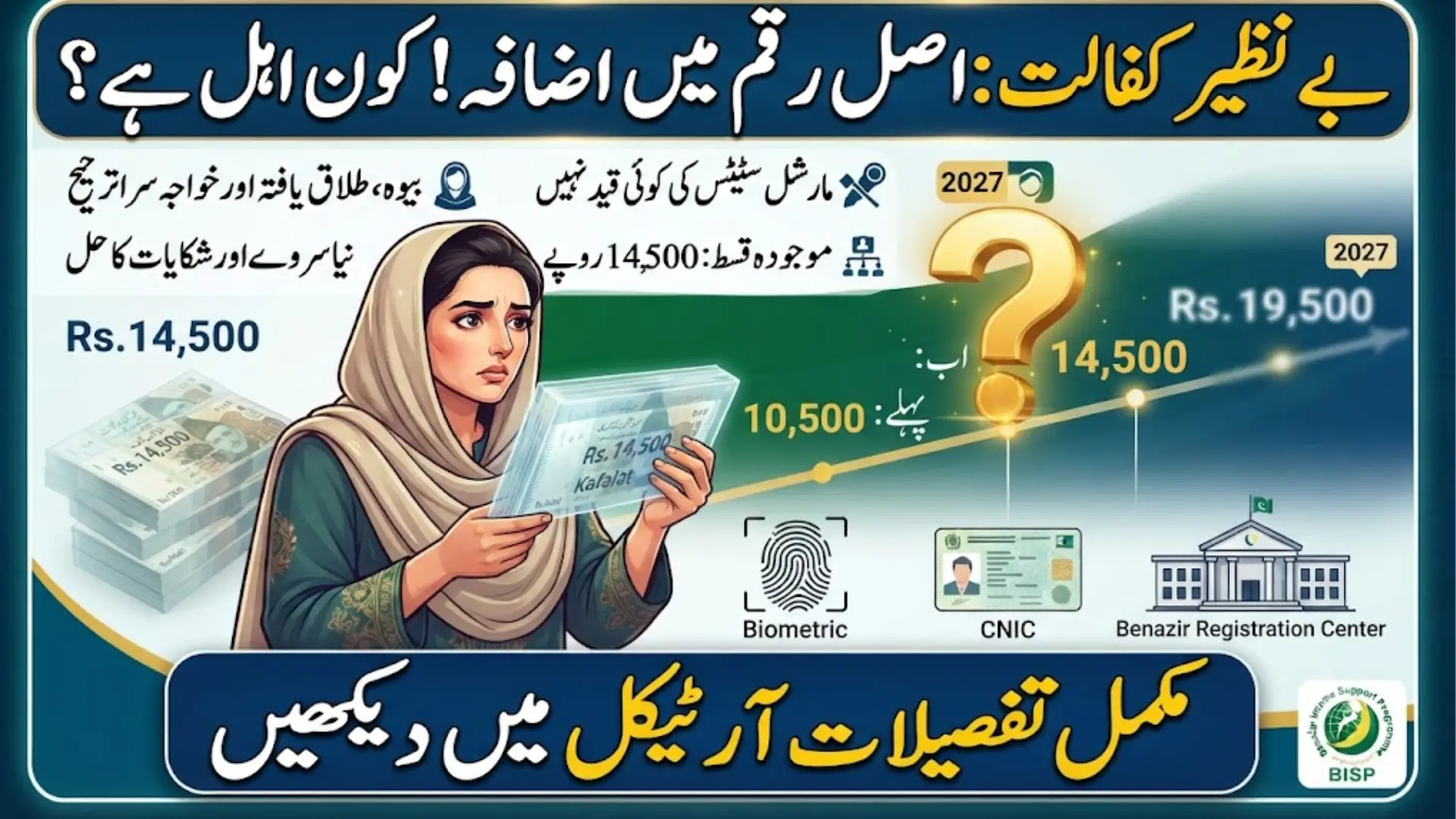
Ehsaas Grant Increase
The Ehsaas Grant Increase has been reported with different numbers across different articles, and some guides add eligibility rules that don’t match official policy. One example is the claim that only married women can apply that’s not accurate, and it could stop an eligible widow or divorced woman from even trying.
This guide sets out the real payment increase timeline, clears up who actually qualifies regardless of marital status, and explains what to do if your dynamic survey or complaint seems stuck. Ehsaas and Kafalat refer to the same BISP-run cash transfer, so the terms are used interchangeably here.
Who Actually Qualifies?
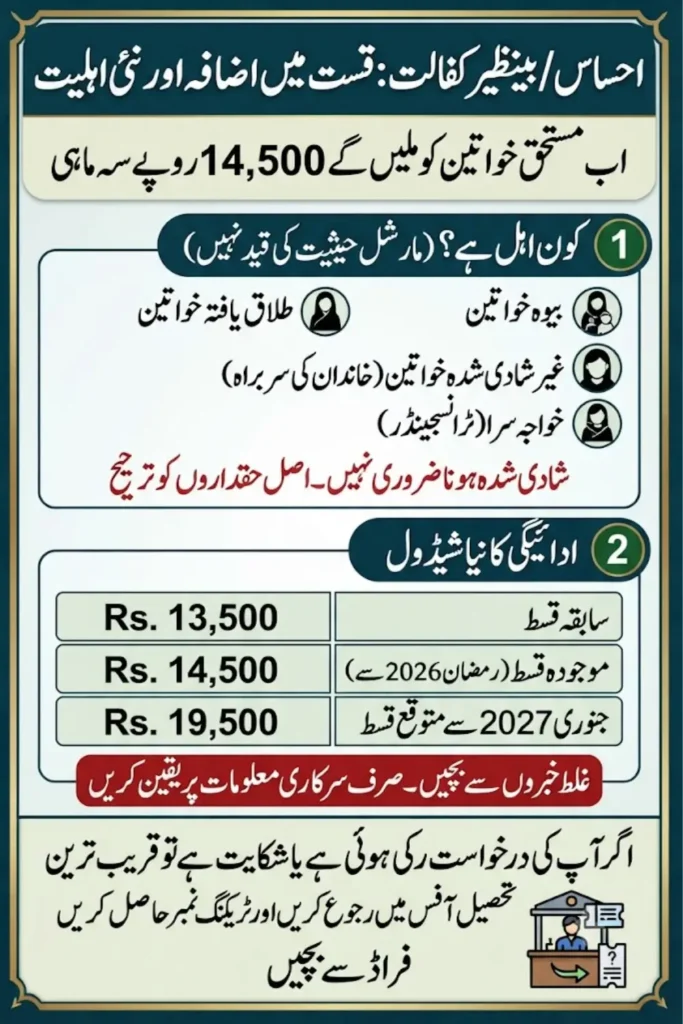
Some guides state that only married women can join the Kafalat program. In reality, marital status works the opposite way: widows, divorced women, and unmarried female heads of household are given priority, not excluded. The program exists specifically to support women who often have the least access to other income sources.
BISP has also approved a policy allowing transgender individuals to apply for cash assistance, provided they hold a CNIC listing their gender as transgender and complete a survey at a Benazir Registration Center. This detail is missing from most guides, but it matters for anyone who was told, incorrectly, that they don’t fit the program’s target group.
Kafalat + Taleemi Wazaif How Much Money You Get Complete Guide
| Household Situation | Eligibility Status |
|---|---|
| Widowed woman, head of household | Priority group |
| Divorced woman, head of household | Priority group |
| Married woman in a low-income household | Eligible if household meets poverty criteria |
| Transgender applicant with updated CNIC | Eligible after registration and verification |
How Much Has the Payment Actually Increased?
Reports of the exact figure vary because the amount has changed more than once over the past few years. The table below lays out the confirmed increases in order, rather than treating them as a single jump.
| Period | Quarterly Kafalat Payment |
|---|---|
| Earlier cycles | Rs. 10,500 |
| Before February 2026 | Rs. 13,500 |
| Current (Ramzan 2026 cycle onward) | Rs. 14,500 |
An additional increase to Rs. 19,500 has been approved but is scheduled to take effect from January 2027, so it isn’t part of the current payment yet. If an article claims a jump directly from Rs. 10,500 to Rs. 13,500 as the latest news, that figure is now out of date.
Poverty Score and Basic Requirements
Your household’s Poverty Means Test (PMT) score, calculated from your National Socio-Economic Registry (NSER) survey data, is the main factor in eligibility. BISP adjusts this threshold from time to time, so it’s more reliable to check your own CNIC status directly than to rely on a fixed percentage quoted in an older article.
Beyond the poverty score, a few consistent conditions apply across cycles:
- No household member should hold a government job or draw a pension above the set limit.
- The applicant must hold a valid, unexpired CNIC.
- The household must be recorded in the NSER Dynamic Survey, completed or updated at a BISP Tehsil Office.
- Households with a car, significant landholding, or high electricity usage are generally excluded.
What to Do If Your Application Feels Stuck
If you registered but haven’t seen movement, a few common issues are usually the cause rather than a rejection:
- Your dynamic survey hasn’t been processed yet, which can take longer during high-volume registration periods.
- Your district hasn’t entered its active payment phase for the current quarter.
- Your CNIC details don’t match NADRA’s records exactly, which needs correction at a NADRA office first.
- You haven’t yet completed biometric verification at a payment center.
Filing a Complaint the Right Way
If you’ve ruled out the issues above and still see no progress, visiting your nearest BISP Tehsil Office in person is more effective than repeated SMS checks. Resolution times vary by case complexity and current complaint volume, so it’s worth asking for a tracking number rather than expecting a fixed turnaround.
Final Words
The real story behind the Ehsaas Kafalat payment increase is a gradual rise from Rs. 10,500 to Rs. 13,500 and now to Rs. 14,500, not a single jump quoted inconsistently across guides. Eligibility is based on poverty score and household circumstances, not marital status, and widows, divorced women, and transgender applicants are all part of the program’s intended reach. Checking your own CNIC status remains the most reliable way to confirm where you stand.
BISP 8171 Update 2026: Who Will Get Rs. 14,500 Cash Support Complete Guide Step By Step
Frequently Asked Questions
1. Is it true that only married women can join the Kafalat program? No, this is a myth. Widows, divorced women, and unmarried female heads of household are given priority, not excluded.
2. What is the current Kafalat payment after the increase? The confirmed quarterly amount is Rs. 14,500, following earlier increases from Rs. 10,500 to Rs. 13,500.
3. Is a further increase to Rs. 19,500 already in effect? No, that increase has been approved but only takes effect from January 2027. Source:https://bisp.gov.pk/
4. Can transgender individuals apply for Benazir Kafalat? Yes, BISP has a policy allowing transgender applicants to register with a CNIC listing their gender, followed by verification at a Benazir Registration Center.
5. My CNIC shows I’m registered, but I still haven’t received payment. What should I do? Check whether your district’s payment phase has started and your biometric verification is complete. If both are fine, visit a BISP Tehsil Office to file a formal complaint.