
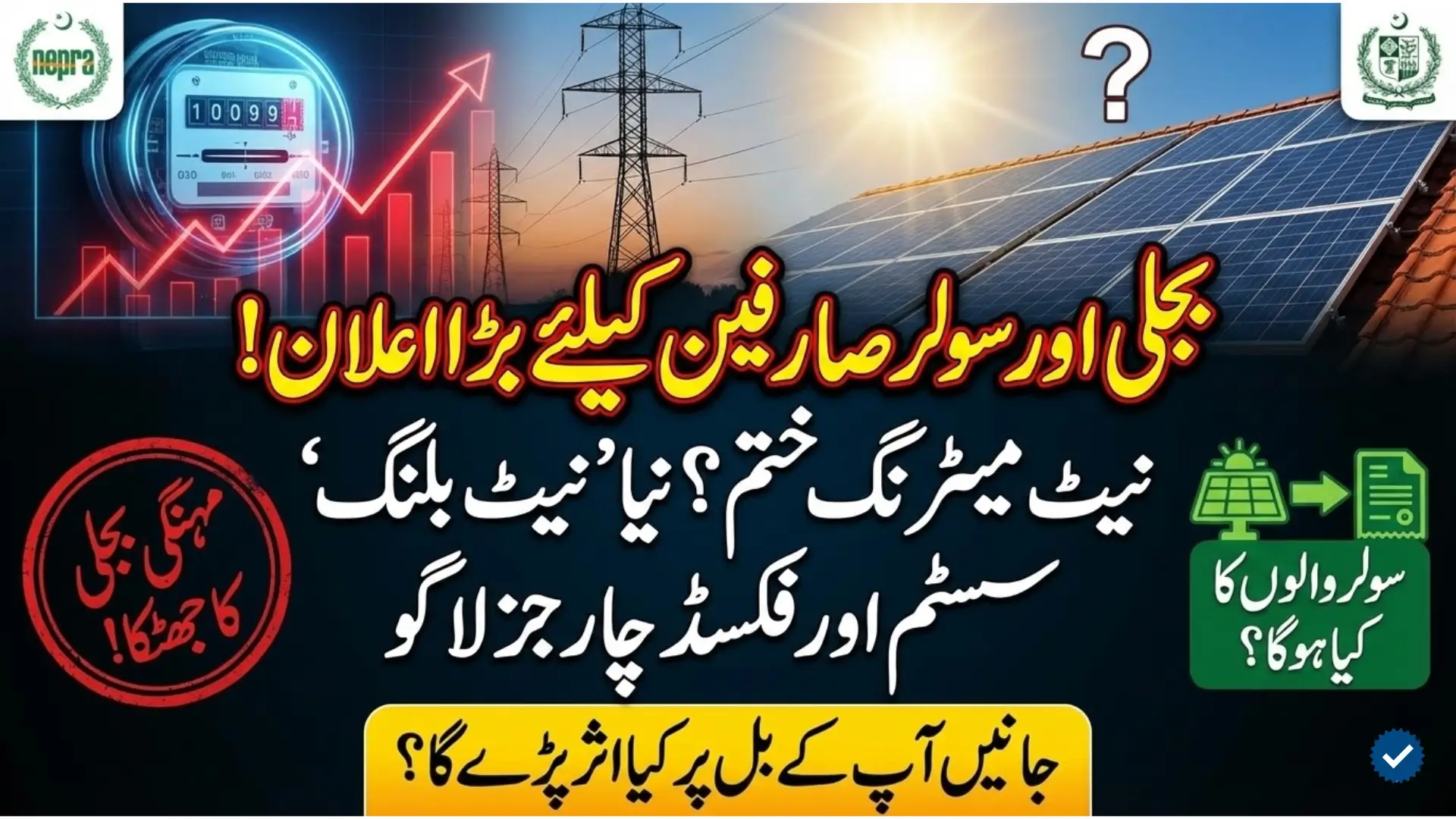
Net Billing System for Three-Phase Electricity Consumers
The federal government has introduced new fixed charges for three-phase electricity consumers, including both households and businesses with solar systems. These charges will be reflected in this month’s electricity bills. This new change is set to impact many consumers, particularly in private housing societies and those who have adopted solar power.
This move comes alongside the introduction of the “Solar Consumers Regulations 2026” by NEPRA. The new framework replaces net metering with a net billing system, which will change how solar consumers are charged. Let’s explore what these changes mean for consumers.
Punjab Biodiversity Corridors Initiative: Climate Resilient Punjab Programme Explained
New Fixed Charges for Three-Phase Electricity Consumers
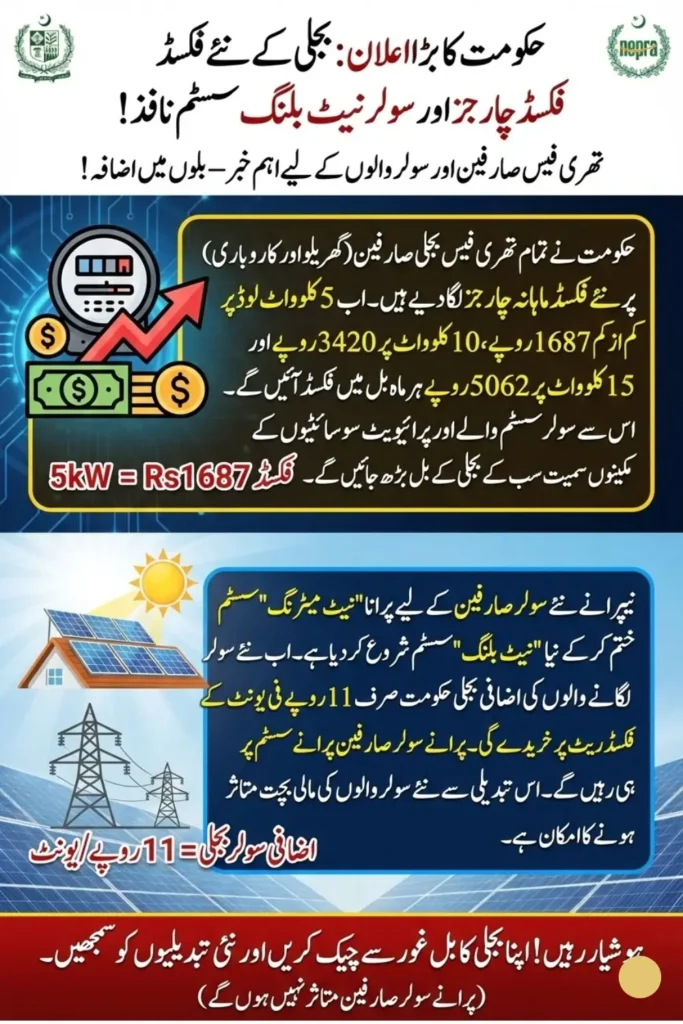
The federal government has set fixed charges based on the approved load for each three-phase connection. Consumers with a 5-kilowatt load will now pay a minimum charge of Rs1,687. For higher loads, the charges increase incrementally. A 15-kilowatt connection will face a charge of Rs5,062. Consumers with loads above 15 kilowatts will pay even higher fees.
- 5-kilowatt load: Rs1,687
- 10-kilowatt load: Rs3,420
- 15-kilowatt load: Rs5,062
- Higher loads: Further increased charges
These charges are set to impact both residential and commercial electricity users, especially in areas where the load demand is higher. The new charges will likely result in higher electricity bills for many consumers, particularly in private housing societies with larger connections.
Impact on Solar System Users
Solar system users will experience significant changes due to the introduction of the net billing system. Under the new system, solar users will no longer enjoy net metering, where they could adjust their solar production with their electricity consumption. Instead, a net billing system will be implemented. This means that excess electricity generated by solar systems will now be bought by the government at a fixed rate of Rs11 per unit.
- Net metering replaced by net billing
- Surplus electricity purchased at Rs11 per unit
- Existing solar users will continue with the old system
The new rules will mainly affect new solar consumers. Existing users will remain under the previous net metering structure. This change is expected to affect the financial savings for new solar system users, especially those who produce more power than they consume.
KP Ehsaas Internship Program 2026: Rs 25,000 Stipend for BS Students
NEPRA’s Approval and Role in the Changes
The National Electric Power Regulatory Authority (NEPRA) approved these new charges and regulations. Their approval is critical in shaping Pakistan’s energy sector. The changes aim to make the electricity system more efficient and ensure fairness in the distribution of electricity costs.
NEPRA’s approval also signifies the importance of regulating renewable energy sources like solar power. By introducing net billing, NEPRA hopes to stabilize the energy market while promoting solar energy usage. The new system encourages consumers to consume more of the electricity they generate themselves.
Additionally, net metering is being replaced with a net billing system for new solar users, where surplus solar electricity will be purchased at Rs11 per unit, while existing users will continue under the old system.
The Solar Consumers Regulations 2026
The “Solar Consumers Regulations 2026” aim to regulate the growing number of solar power users in the country. The key change here is the shift from net metering to net billing. Under net metering, solar consumers were credited for the electricity they supplied back to the grid. However, under the net billing system, they will receive a fixed Rs11 per unit for excess power sold to the grid.
These regulations are designed to encourage more households and businesses to adopt solar energy. With net billing, the government aims to ensure fair compensation for solar power producers, although the transition may initially seem less favorable to new solar consumers.
Under the new Solar Consumers Regulations 2026, net metering is being replaced with net billing for new solar users, with surplus electricity purchased at a fixed rate of Rs11 per unit.
Sightseeing Lahore Bus Service Schedule 2026: Updated Routes, Timings and Ticket Fares by TDCP
Conclusion
In conclusion, the new fixed charges for three-phase electricity connections and the shift from net metering to net billing will have a significant impact on both regular electricity consumers and solar system users. While the new fixed charges may increase bills for households and businesses, the net billing system brings a change for solar consumers that could influence future adoption rates.
Consumers should carefully review their bills and consider their energy needs under the new structure to understand how these changes will affect their finances.
FAQs
What is the new fixed charge for electricity consumers?
The new fixed charge for a 5-kilowatt load is Rs1,687, with charges increasing based on the load.
How does the net billing system affect solar consumers?
Under net billing, solar consumers will be paid Rs11 per unit for surplus electricity, unlike the previous net metering system.
Who will be affected by these changes?
The new charges and net billing system will affect both three-phase electricity consumers and new solar system users.
Benazir Taleemi Wazaief 2026 Complete Guide for Eligibility and Application