

NEPRA Solar System License Fee
Pakistan’s Ministry of Power Division has introduced new amendments to solar system regulations. These changes make it mandatory for all consumers to obtain a license from NEPRA. The National Electric Power Regulatory Authority will now regulate all individuals generating electricity through solar systems.
This policy shift marks a significant change in how the government approaches solar energy. Previously, many consumers enjoyed free licensing benefits. The new amendments withdraw those benefits and introduce a structured fee-based licensing system for everyone.
GCU Intermediate Admissions 2026: 3,000 Seats Announced with New KSK Campus Expansion
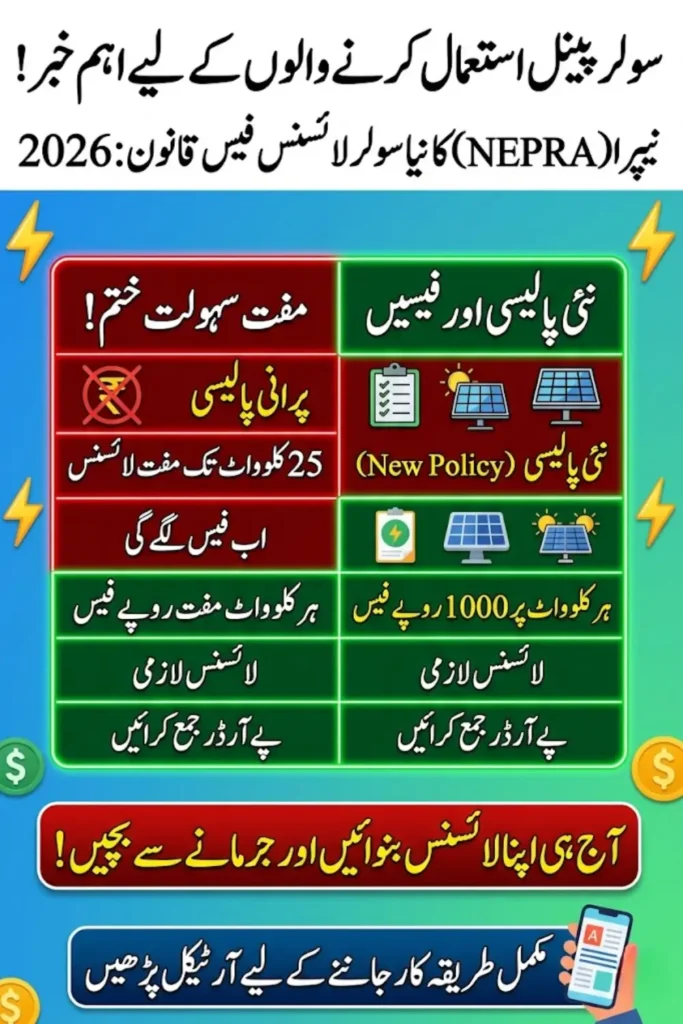
What Are the New NEPRA Solar System Regulations 2026?
The revised NEPRA solar system regulations require every consumer to obtain an official license before generating electricity. This applies to all solar system owners regardless of their system’s capacity. The Ministry of Power Division introduced these amendments as part of a broader regulatory overhaul of the energy sector.
Under the new rules, applicants must go through a formal licensing process with NEPRA. The process includes submitting a pay order in the name of NEPRA along with the license application. These steps are now compulsory for all consumers seeking to install or continue operating a solar power system in Pakistan.
NEPRA Solar System License Fee – How Much Will Consumers Pay?
The NEPRA solar system license fee is calculated based on the total capacity of the installed solar system. Consumers will pay Rs. 1,000 for every kilowatt of their system’s generation capacity. This means the total fee will increase proportionally as the system size increases.
Along with the per-kilowatt fee, applicants must also submit a pay order made in the name of NEPRA. This pay order is a required part of the formal license application process. Consumers should calculate their expected fee before applying to ensure they submit the correct payment amount without delays.
What Changed – Old Policy vs New NEPRA Solar System License Fee Policy
The most significant change under the new amendments is the removal of the free licensing provision. Previously, consumers installing solar systems of up to 25 kilowatts were granted licenses completely free of charge. This benefit has now been fully withdrawn under the revised regulatory framework.
The contrast between the old and new policy is clear and directly affects a large number of small-scale solar users. Consumers who previously enjoyed zero-cost licensing now face a mandatory payment obligation. This change applies universally and no exemption based on system size has been mentioned in the new amendments.
NEPRA Concurrence Regulations in Pakistan 2026 New Rules for Power Generation Approval
Old vs New NEPRA Solar System License Fee Policy Comparison
Understanding the difference between the previous and current policy helps consumers plan accordingly. The new framework introduces financial obligations that did not exist before for smaller system owners. A side-by-side comparison makes the changes easier to understand at a glance.
Here is a clear comparison of the old and new solar licensing policy:
| Policy Component | Previous Policy | New Policy 2026 |
|---|---|---|
| Licensing Requirement | Required for larger systems | Mandatory for all consumers |
| Fee for Up to 25kW Systems | Free of charge | Rs. 1,000 per kilowatt |
| Fee Calculation Basis | Not applicable for small systems | Based on total system capacity |
| Pay Order Requirement | Not required for small systems | Mandatory for all applicants |
| Connection Framework | Standard connection | Net billing project framework |
| Free License Provision | Available up to 25kW | Completely withdrawn |
This comparison clearly shows how the regulatory environment has shifted. Small and medium solar system owners are the most directly affected by these changes. All consumers must now factor in the licensing fee when planning a new solar installation or maintaining an existing one.
Who Is Affected by the New NEPRA Solar System License Fee?
The new NEPRA solar system license fee affects all consumers who generate electricity through solar systems. This includes homeowners, commercial establishments, and small businesses operating solar setups. No category of consumer is exempt from the new licensing requirement under the amended regulations.
The most impacted group is domestic consumers who previously qualified for the free license under the 25-kilowatt threshold. These users now face an additional financial cost they were not required to pay before. The following groups must now comply with the new licensing rules:
- Residential consumers with rooftop solar systems of any capacity
- Small business owners operating solar setups below 25 kilowatts
- Commercial consumers with medium to large solar installations
- New consumers planning to install solar systems in 2026 and beyond
- Existing solar system owners who previously held free licenses
All these consumers must now obtain a paid license from NEPRA to legally generate electricity. Failure to comply with the new regulations could result in legal or operational consequences. It is strongly advised that all affected consumers begin the licensing process without delay.
Net Billing Project Framework – What It Means for Solar Consumers
Under the new amendments, consumers will be provided connections under a net billing project framework. This framework governs how solar consumers are connected to the national grid. It determines how electricity generated by consumers is measured, recorded, and credited against their consumption.
Net billing is a system where the electricity a consumer feeds back into the grid is calculated separately from what they consume. This is different from net metering where the two are directly offset against each other. The shift to a net billing framework represents a new approach to managing the growing number of solar energy contributors in Pakistan’s power network.
Punjab Child Marriage Restraint Bill 2026 Passed Minimum Marriage Age Set to 18 for Boys and Girls
Why Pakistan Is Changing Its Solar Energy Regulatory Policy
The government’s decision to revise the NEPRA solar system license fee policy reflects the rapid growth of solar energy adoption in Pakistan. As more consumers install solar systems, regulating grid connections and electricity generation has become increasingly important. A structured licensing framework helps NEPRA maintain oversight over the national power supply.
The introduction of fees also helps recover regulatory costs associated with managing a large number of solar connections. The following reasons explain the broader context behind this policy shift:
- Rapid increase in residential and commercial solar installations across Pakistan
- Need for a structured regulatory framework to manage grid stability
- Recovery of administrative and operational costs through licensing fees
- Transition toward a more organized net billing system for solar contributors
- Standardizing the process for all consumers regardless of system size
These changes signal a maturing regulatory environment for renewable energy in Pakistan. The government appears to be moving toward a more formal and accountable solar energy sector. While the new fees add a financial burden, they also bring greater structure and legal clarity to solar energy operations nationwide.
Conclusion
The new NEPRA solar system license fee amendments represent a major shift in Pakistan’s solar energy policy. All consumers are now required to obtain a paid license regardless of their system’s capacity. The free licensing provision for systems up to 25 kilowatts has been completely removed.
Consumers must pay Rs. 1,000 per kilowatt and submit a pay order to NEPRA as part of the application process. Connections will now be provided under a net billing project framework. All solar system owners should act promptly to comply with the new regulations and avoid any disruption to their electricity generation setup.
Frequently Asked Questions
What is the new NEPRA solar system license fee in 2026? Consumers must now pay Rs. 1,000 per kilowatt based on their solar system’s total capacity. This fee applies to all consumers and must be submitted along with a pay order in the name of NEPRA.
Is a NEPRA license now mandatory for all solar system owners? Yes, the new amendments make it mandatory for all consumers to obtain a NEPRA license to generate electricity. This applies regardless of the size or capacity of the solar system installed.
Was there a free license for solar systems before these amendments? Previously, consumers with solar systems of up to 25 kilowatts were granted licenses free of charge. This provision has been completely withdrawn under the new 2026 amendments introduced by the Ministry of Power Division.
What is a pay order and why is it required for the NEPRA license? A pay order is an official bank payment instrument that must be submitted in the name of NEPRA as part of the license application. It serves as the formal payment method for the solar system licensing fee.
What is the net billing framework mentioned in the new amendments? Net billing is a connection framework where electricity generated and consumed by solar users is measured separately. Consumers will now be connected to the grid under this framework as per the revised regulatory policy.
Who introduced the new NEPRA solar system license fee amendments? The amendments were introduced by Pakistan’s Ministry of Power Division as part of a revised regulatory approach to solar energy. The changes are enforced through the National Electric Power Regulatory Authority known as NEPRA.