

Amazon Globalstar Merger Satellite Network
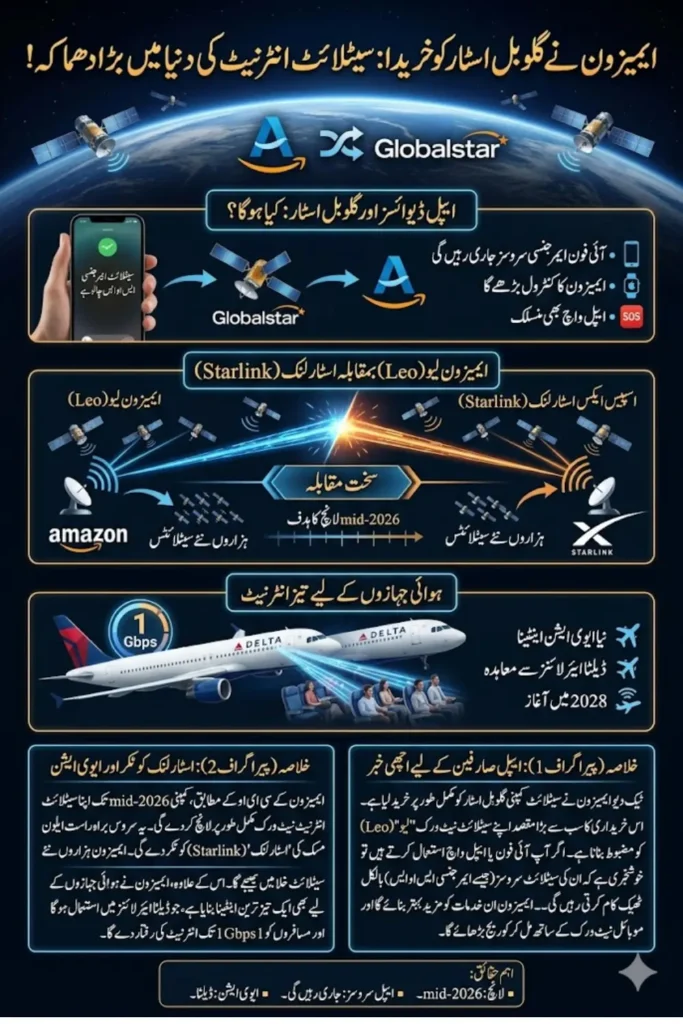
Amazon and Globalstar have officially announced a merger agreement. This deal gives Amazon full control of Globalstar. It marks a major step in Amazon’s push to build a global satellite network.
Globalstar is already known for supporting emergency and connectivity features on Apple devices. The iPhone and Apple Watch both rely on Globalstar’s satellite system. This merger connects two major technology ecosystems under one strategic direction.
BISP Transgender Cash Program 2026 NADRA Registration, Survey & Payment Details
Amazon Globalstar Merger: What the Deal Actually Means
The merger means Amazon now holds a stake in an active, functioning satellite operator. Globalstar brings real infrastructure and existing device partnerships to the table. This gives Amazon a strong head start in the satellite communications race.
The deal strengthens Amazon’s position in the low-earth orbit market. It also gives the company leverage against competitors like SpaceX Starlink. For consumers, it signals a more connected and competitive satellite future.
- Amazon gains control of an operational satellite network through this merger.
- Globalstar’s existing Apple partnership transfers into Amazon’s ecosystem.
- The deal accelerates Amazon’s timeline in the satellite communications market.
Amazon Leo Satellite Network: Expanding Low-Earth Orbit Ambitions
Amazon has been building its own low-earth orbit satellite network for several years. The project is called Amazon Leo. It aims to deliver internet access to remote and underserved regions around the world.
Amazon Leo is designed to compete directly with SpaceX’s Starlink service. While Starlink is currently operating at a much larger scale, this merger helps Amazon close that gap. The addition of Globalstar’s infrastructure gives Leo a meaningful boost.
Amazon Leo vs SpaceX Starlink: Key Comparison
| Feature | Amazon Leo | SpaceX Starlink |
| Network Type | Low-Earth Orbit | Low-Earth Orbit |
| Launch Target | Mid-2026 | Currently Active |
| Apple Support | Yes (via Globalstar) | No (declined) |
| Aviation Plans | Yes (Delta, 2028) | Qatar, British Airways |
| Satellite Scale | Expanding | Several Thousand Active |
Apple Device Satellite Services to Continue After Amazon Globalstar Merger
Apple users will not lose their satellite connectivity features. Amazon confirmed that current and future Apple devices will continue using satellite services. These services will run through the Globalstar system as it merges into Amazon Leo.
Amazon executive Panos Panay made a public statement on this matter. He said the company is excited to support Apple users through the Leo Direct-to-Device system. Amazon also plans to work with mobile network partners to expand global coverage.
- Apple iPhone and Apple Watch satellite features remain fully operational.
- Globalstar’s system will integrate into Amazon Leo Direct-to-Device.
- Amazon plans to expand satellite coverage through mobile network partnerships.
LHV Admission Punjab 2026 Lady Health Visitor Course Online Apply at pshealthpunjab.gov.pk
Apple and Globalstar Satellite Partnership: A Brief History
Apple introduced satellite connectivity with the iPhone 14 in 2022. The company partnered with Globalstar to power emergency SOS and other satellite-based features. Apple also made a direct financial investment in Globalstar as part of that arrangement.
Reports suggest Apple declined a direct partnership with SpaceX Starlink. The decision was reportedly linked to disagreements with Elon Musk, according to sources cited by 9to5Mac. This made Globalstar Apple’s primary satellite partner, a role that now carries even more weight under Amazon.
Amazon Leo Launch Timeline and Satellite Deployment Plans
Amazon CEO Andy Jassy confirmed a mid-2026 launch target for the Leo network. The company plans to deploy several thousand additional satellites in the coming years. This large-scale rollout is necessary to compete with Starlink’s already established coverage.
Scaling a satellite network is a complex and costly process. Amazon faces technical and logistical challenges as it builds out Leo. However, the Globalstar merger gives the company an existing operational base to work from, which reduces the time needed to reach meaningful coverage.
- Mid-2026 is the confirmed launch target for Amazon Leo.
- Thousands of new satellites are planned for deployment post-launch.
- Globalstar’s infrastructure helps reduce the scaling challenge for Amazon.
Amazon Globalstar Merger: Key Facts Summary
| Detail | Information |
| Merger Parties | Amazon and Globalstar |
| Apple Device Support | Continues via Globalstar/Leo |
| Amazon Leo Launch | Mid-2026 |
| Aviation Partner | Delta Airlines |
| Aviation Speed | Up to 1 Gbps download |
| Aviation Start Date | 2028 |
| Apple-Globalstar Start | 2022, iPhone 14 |
Amazon Aviation Internet Plans: New Antenna and Delta Partnership
Amazon has introduced a new aviation antenna as part of its expanding satellite strategy. The antenna is designed to deliver download speeds of up to one gigabit per second for commercial aircraft. This positions Amazon as a serious player in the in-flight internet market.
Delta Airlines has already signed an agreement with Amazon for this aviation service. The service is expected to begin operating in 2028. This is a significant commercial deal that puts Amazon in direct competition with Starlink’s airline partnerships.
Amazon Leo vs Starlink: Competition in Satellite Communications
SpaceX Starlink currently leads the satellite internet market by a large margin. It already has airline agreements with carriers such as Qatar Airways and British Airways. Amazon Leo is working to close this competitive gap through strategic moves like the Globalstar merger.
The Amazon Globalstar merger satellite network deal shifts the competitive landscape. Amazon now has an active network, Apple device partnerships, and aviation contracts in development. This combination makes Leo a more credible challenger to Starlink than it was just months ago.
- Starlink holds airline deals with Qatar Airways and British Airways.
- Amazon Leo targets Delta Airlines with its new aviation antenna service.
- The Globalstar merger gives Amazon Leo both scale and device-level reach.
STEM Career Program Science Olympiad Admission 2026 – NSTC-23 Online Apply at stem.edu.pk
Frequently Asked Questions (FAQs)
Q1. What is the Amazon Globalstar merger about?
Amazon has agreed to acquire Globalstar, the satellite company that supports Apple device connectivity. The deal strengthens Amazon’s Leo satellite network and expands its reach in the global satellite communications market.
Q2. Will Apple device satellite features still work after the merger?
Yes, Apple iPhone and Apple Watch satellite services will continue to operate normally. Amazon confirmed that Globalstar’s system will be integrated into the Amazon Leo Direct-to-Device network without disruption.
Q3. When will Amazon Leo satellite network launch?
Amazon CEO Andy Jassy announced a mid-2026 launch target for the Leo network. The company also plans to deploy thousands of additional satellites in the years following the initial launch.
Q4. Why did Apple not partner with SpaceX Starlink?
Reports from sources cited by 9to5Mac indicate that Apple declined a Starlink partnership due to disagreements with Elon Musk. Apple instead chose Globalstar as its satellite connectivity partner starting with the iPhone 14 in 2022.
Q5. What are Amazon’s aviation satellite internet plans?
Amazon has developed a new aviation antenna capable of one gigabit download speeds for commercial aircraft. Delta Airlines has already signed up, with the service expected to begin in 2028.
Conclusion
The Amazon Globalstar merger satellite network deal is one of the most significant moves in the satellite communications industry in recent years. It gives Amazon a real foothold in an active, device-connected satellite ecosystem. Apple users, airline passengers, and people in remote areas all stand to benefit from this development.
Amazon Leo now has the infrastructure, partnerships, and ambition to challenge SpaceX Starlink on multiple fronts. With a mid-2026 launch target and aviation plans already in motion, the satellite internet race is entering a new and more competitive phase.